
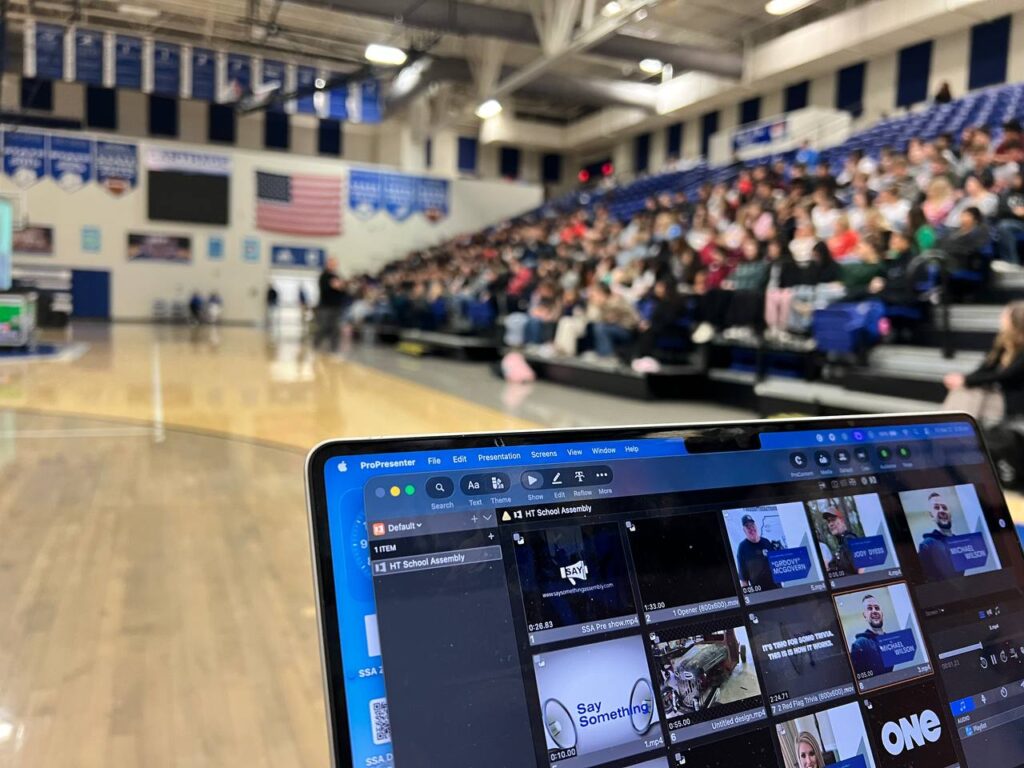
Impactful School Assemblies on Exploitation Prevention
Say Something provides comprehensive exploitation prevention school assemblies and youth safety presentations designed to protect students. Engaging, age-appropriate prevention education that equips students to recognize grooming, exploitation, trafficking, bullying, and other risks—and know when and how to speak up.
500+
Schools Reached
800,000+
Students Empowered
13+ Years
Prevention Experience
Prevention Education Students Can Use
Say Something school assemblies go beyond awareness. Students learn how to recognize behaviors, situations, and warning signs that can place them or someone they know at risk—and what they can do when something doesn’t feel right.
RECOGNIZE THE PATTERNS
Grooming, manipulation, exploitation, trafficking, bullying, and other behaviors that can develop before a situation becomes dangerous.
UNDERSTAND THE RISKS
Age-appropriate conversations about online and real-world situations students encounter, including how seemingly normal interactions can cross boundaries.
KNOW HOW TO RESPOND
Practical steps for setting boundaries, seeking help, supporting a friend, and speaking to a trusted adult when something isn’t right.
Choose the School Assembly Experience That Fits Your School
Every school is different. Say Something offers flexible school assembly options designed around your audience, schedule, campus, and goals—from our full multimedia experience to focused presentations led by an individual speaker.
FULL MULTIMEDIA MULTI-PRESENTER ASSEMBLIES
Our signature school assembly experience combines dynamic presenters, multimedia, real-world stories, practical prevention education, and survivor-informed perspectives to create an engaging experience students remember.
- Multiple presenters
- Multimedia presentation
- Survivor-informed perspectives
- Age-appropriate student sessions
- Multi-day scheduling available
- Designed for large-scale school and district impact
INDIVIDUAL SPEAKER ASSEMBLIES
Bring the message of Say Something to your students through a focused, engaging presentation led by an experienced speaker. An ideal option for schools seeking powerful prevention education with simpler logistics and greater scheduling flexibility.
- One experienced presenter
- Minimal production requirements
- Age-appropriate presentation
- Flexible scheduling
- Ideal for individual schools and smaller audiences
- Available for assemblies, student groups, and special events
Age-Appropriate. Audience-Specific. Never One-Size-Fits-All.
Prevention education only works when students can understand it, relate to it, and know what to do with it. Say Something presentations are adapted to the age, developmental level, and needs of the students in the room.
MIDDLE SCHOOL ASSEMBLIES GRADES (6-8)
Practical conversations about boundaries, peer pressure, online interactions, manipulation, grooming behaviors, bullying, exploitation, and recognizing when a situation is becoming unsafe.
HIGH SCHOOL ASSEMBLIES GRADES (9-12)
More direct conversations about grooming, coercion, exploitation, human trafficking, unhealthy relationship dynamics, online risks, warning signs, and how to respond when they recognize them.
We work with school leadership to ensure the presentation is appropriate for your students, community, and campus.
What to Expect When You Bring Say Something to Your School
We make the process as simple as possible for school administrators. From planning and scheduling to presentation day, our team works with your school to create an experience that fits your students, facilities, and schedule.
1. PLAN
We Start With Your School
We discuss your student population, grade levels, schedule, areas of concern, and goals so we can recommend the right presentation approach.
2. PREPARE
We Coordinate the Details
Our team works with your designated contact to coordinate scheduling, presentation space, technology needs, and other logistics before arrival.
3. PRESENT
We Engage Your Students
Students experience an engaging, age-appropriate presentation built around practical prevention, recognizable warning signs, real-world situations, and knowing when to speak up.
4. RESPOND
We Prepare for What Happens Next
Prevention conversations can lead students to disclose concerns or ask for help. We encourage schools to have counselors, administrators, or other appropriate personnel available to support students following the presentation.
Flexible Scheduling for Your School
Presentations can be coordinated around class periods, grade-level groups, multiple assemblies, or other scheduling needs. Multi-day options are available for schools and districts seeking to reach multiple campuses or student groups.
Have questions about logistics?
Trusted By School Leaders
“Say Something gives students a voice, encourages them to speak up, and helps schools create an environment where every student feels seen, heard, and supported.”
-Dr Ricky Catlett
Jackson-Madison County School Assistant Superintendent (Retired)
Frequently Asked Questions
What grade levels do you present to
6th thru 12th Grades… Expansion to Elementary level students is in development.
What topics are covered in the assembly?
Our assemblies address issues affecting students both online and in everyday life, including bullying, suicide awareness, grooming, exploitation, human trafficking, online safety, manipulation, healthy boundaries, and recognizing concerning behaviors. Specific topics can be adjusted based on the needs and concerns of your school.
How do you handle sensitive subject matter?
We believe prevention education can be honest without being graphic or fear-based. Sensitive topics are presented in an age-appropriate way with an emphasis on recognition, prevention, healthy boundaries, speaking up, and seeking help. Our goal is to equip students—not frighten them.
Can the presentation be customized for our school?
Yes. We want the presentation to address the needs of the students actually sitting in the room. Before an event, we work with school leadership to understand your student population, grade levels, areas of concern, and any circumstances that should be considered when preparing the presentation.
Can you present multiple times in one day?
Yes. Multiple presentations can often be scheduled during the same day, allowing schools to separate students by grade level or age and helping us tailor the presentation appropriately for each audience. We can work with your administration to determine the best schedule for your campus.
Do you work with entire school districts?
Yes! We actually prefer it this way! Say Something can work with an individual school or coordinate presentations across multiple campuses. Multi-day options are available for districts and communities that want to reach a larger number of students while adapting presentations for different schools and grade levels.
Do you travel nationwide?
Yes. Say Something works with schools and communities beyond our home region, and our team can travel to schools throughout the United States. When you submit an inquiry, we’ll discuss your location, desired dates, number of presentations, and the assembly option you’re considering.
What does an assembly cost?
Cost depends on several factors, including the type of assembly, number of presenters, number of days, location, travel requirements, and the number of presentations being scheduled. We offer both our full multimedia assembly experience and individual-speaker options, allowing us to explore what best fits your school’s needs and budget. Contact our team for current pricing and availability.
What happens after we submit an inquiry?
Submitting an inquiry doesn’t commit your school to booking an assembly. It starts a conversation. Our team will review your request and provide information about presentation options, scheduling, pricing, logistics, and next steps. We’ll work with you to determine whether Say Something is the right fit for your students and school.
Ready to Bring Say Something to Your Students?
Give your students more than awareness. Equip them to recognize warning signs, understand risky situations, and know when and how to speak up.